
Turning Complex Signals Into Decisions That Scale
I diagnose where systems misread signals and build the operating systems that enable clear, coordinated action.
Work grounded in Living Frameworks — an approach to building adaptive systems that improve how decisions are made under uncertainty.
This includes both the philosophy itself and its application across operational, human, natural, and interpretive systems
Focus:
Diagnosing system breakdowns
Interpreting signals under ambiguity (including lag effects, environmental feedback, and system drift)
Designing adaptive systems that evolve through interaction over time
Experience architecture and operational system design
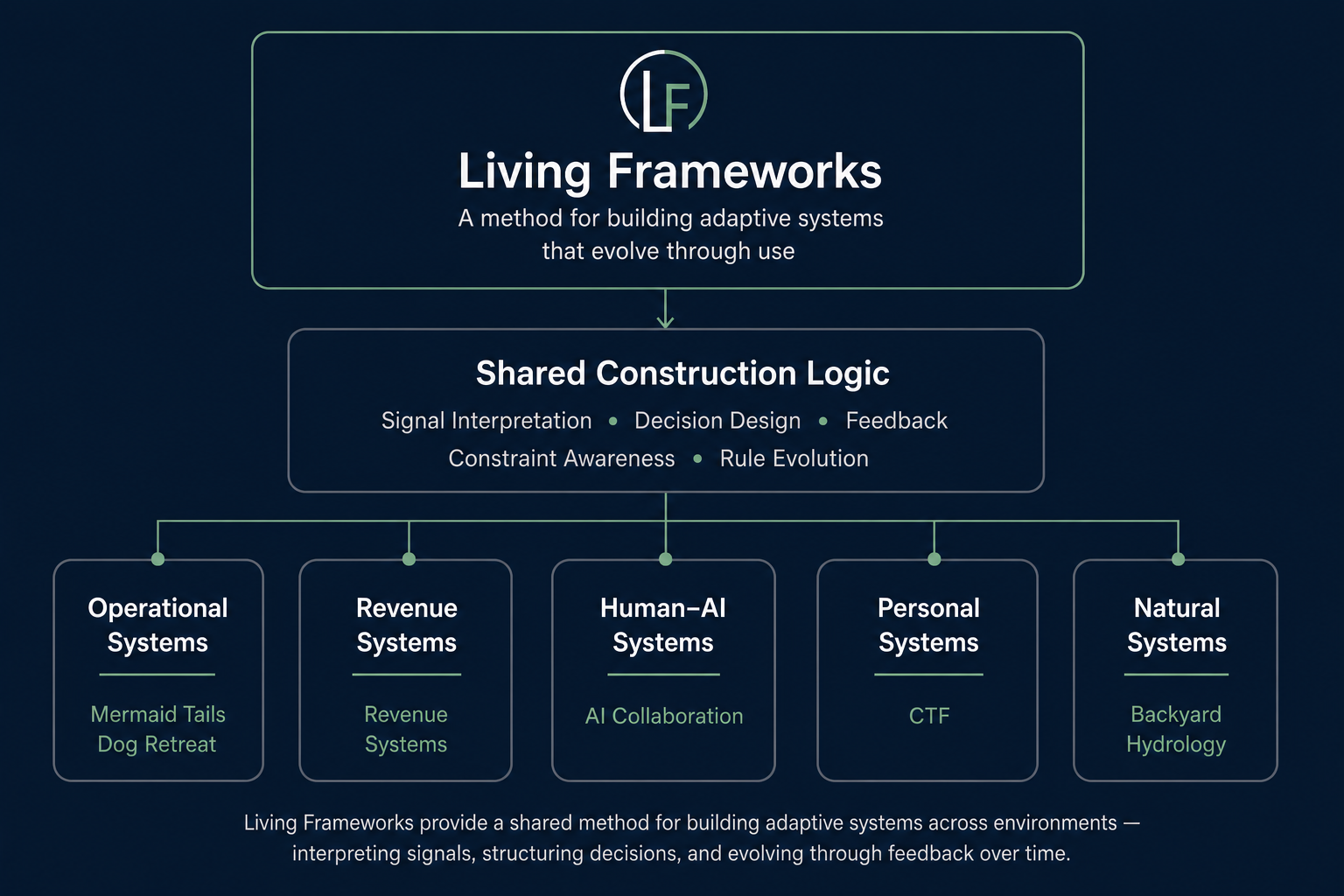
Living Frameworks is an adaptive systems philosophy grounded in operational reality.
Living Frameworks are designed to interpret complex signals, maintain responsiveness under changing conditions, and evolve through interaction over time. Rather than optimizing static metrics, they build the underlying decision logic that allows systems to adapt as conditions change.
Living Frameworks In Practice
Building operating systems in high-uncertainty environments.
Building a business operating system from a founder’s first principles.
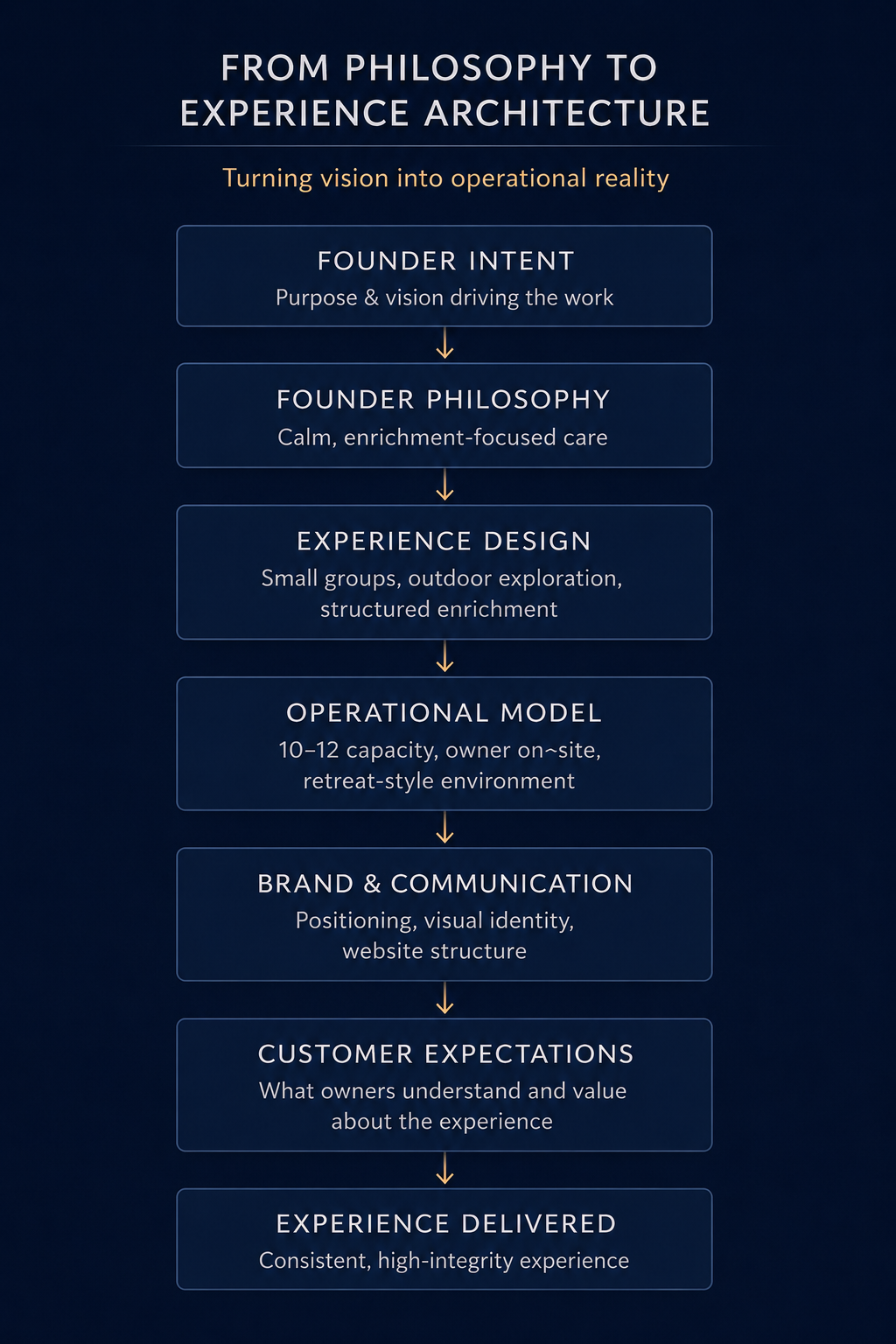
Early-stage businesses often struggle to translate vision into consistent operations, leading to misalignment as they scale.
This work builds the initial operating system of the business — translating a philosophy of care into structured decision-making, operational processes, and experience design.
The system aligns values, decisions, and day-to-day execution, creating consistency across operations and customer experience while reducing downstream friction and rework.
Designed to evolve through feedback, it develops alongside the business, maintaining alignment as conditions change.
Interpreting revenue signals to guide growth decisions.
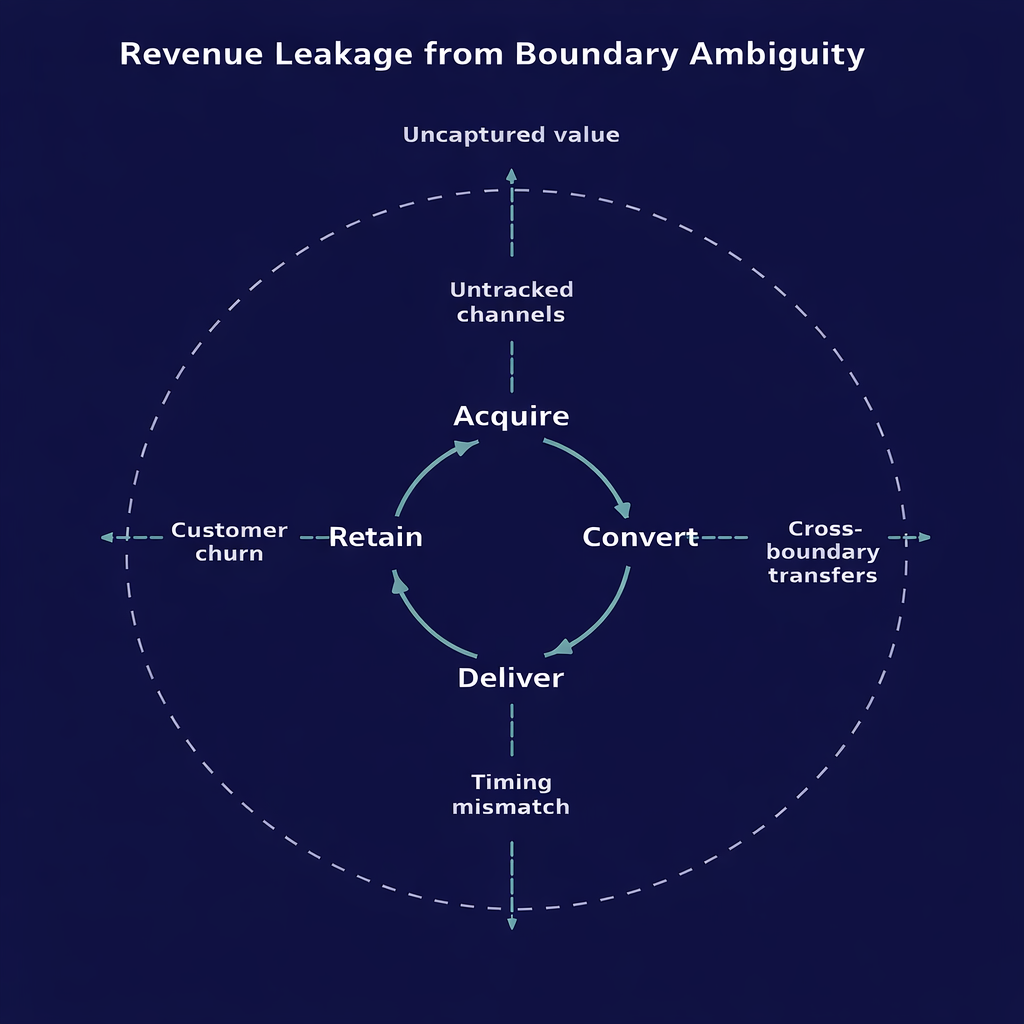
Revenue problems are often treated as metric issues rather than failures in how the system interprets signals.
This work builds a revenue operating system that surfaces how signals move through the business — identifying where breakdowns occur across acquisition, conversion, and retention.
By diagnosing feedback loops, lag effects, and points of misalignment, the system enables teams to allocate resources with precision and scale the parts of the system that actually drive growth.
The system is designed to evolve as new signals emerge, allowing revenue strategy to adapt over time rather than relying on static assumptions.
Designing operating systems for structured human–AI reasoning.
In complex environments, the bottleneck is often not data. It is how problems are structured and decisions are evaluated. This work builds a human–AI operating system for structured reasoning — defining how problems are framed, explored, and refined through iterative interaction.
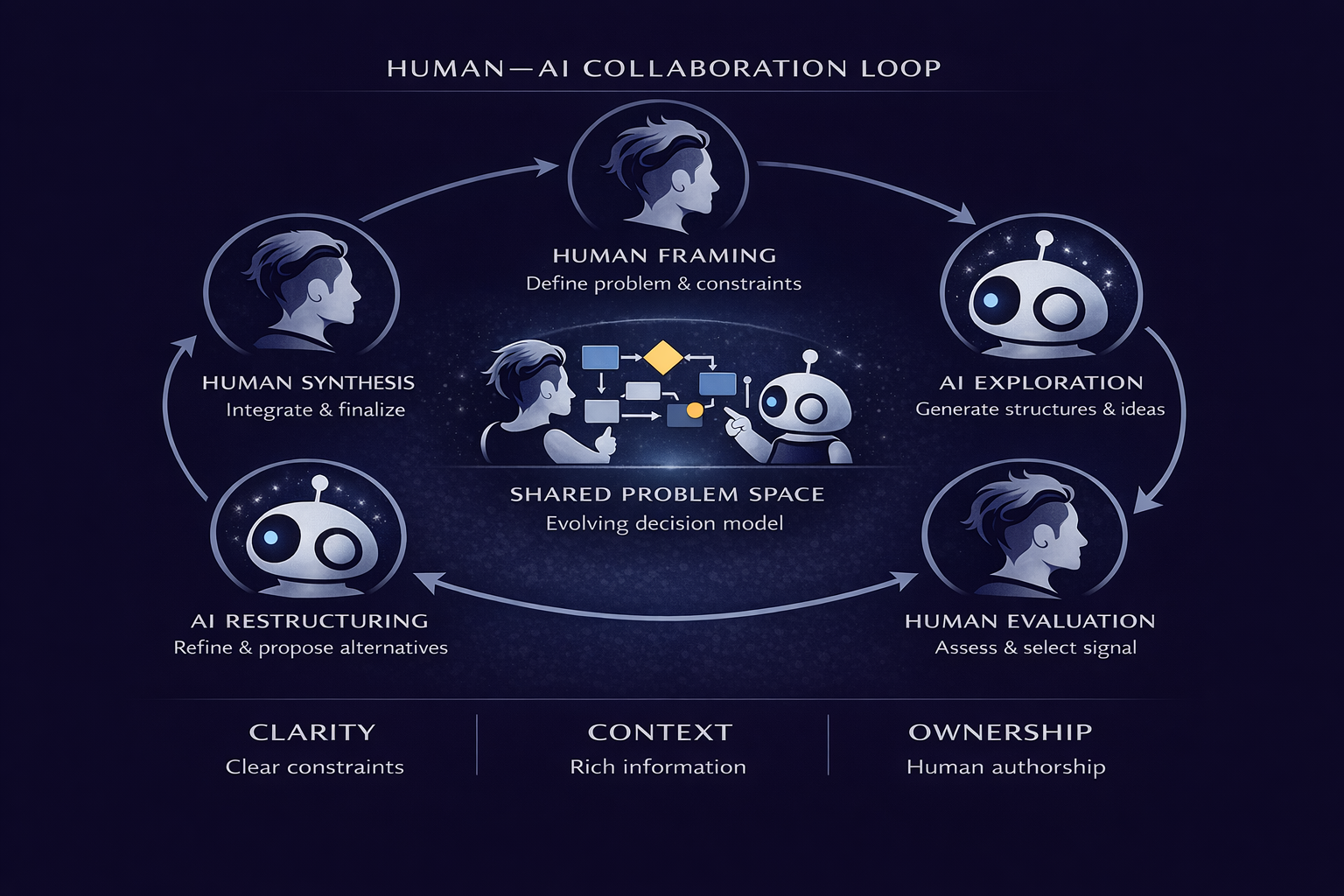
By structuring the collaboration loop between human judgment and AI exploration, the system accelerates iteration, clarifies thinking, and improves decision quality under uncertainty.
This system integrates directly into the Living Frameworks method, structuring reasoning to support rapid iteration and feedback-driven decision design.
Building a personal operating system for navigating uncertainty.
The CTF builds a personal operating system for navigating career uncertainty — structuring how individuals interpret signals, make decisions, and take action over time.
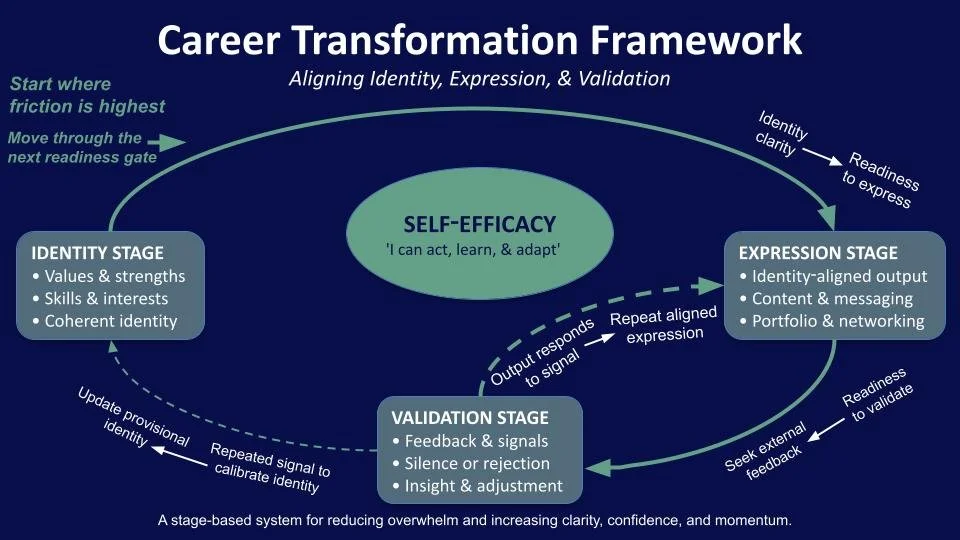
It organizes progress into staged cycles of identity, action, and validation, allowing self-efficacy to emerge through iteration rather than sudden change.
By making decision-making visible and testable, the system supports continuous adaptation as conditions and understanding evolve.
Natural Systems — Backyard Hydrology
Designing a responsive system for managing environmental change.

A recurring backyard flooding problem revealed how water systems stabilize when flow paths are respected rather than forced.
This work builds a localized environmental operating system — mapping how water moves through the landscape and designing interventions that align with natural constraints.
By working with flow dynamics rather than against them, the system stabilizes over time, reducing recurring failures and enabling durable, low-maintenance outcomes.