
Designing the Experience Architecture of a Boutique Dog Boarding Retreat
Translating a founder’s philosophy of care into a pre-launch operating system that continues to evolve alongside facility planning
Meet the Founder
Recently I began working with a founder preparing to launch a boutique dog boarding retreat in rural Maine.
Emily Martin Kelley has more than a decade of experience working in daycares, boarding facilities, and veterinary practices. She built strong trust relationships with clients whose dogs previously attended a daycare she managed. When that facility transferred ownership, many of those clients expressed immediate interest in following her to whatever she built next.
The name "Mermaid Tails Dog Retreat" reflects something personal. The founder has often joked that if she could be anything she would be a mermaid. Her clients already know that about her, so the name carries meaning rooted in familiarity and trust.
Meet Freya
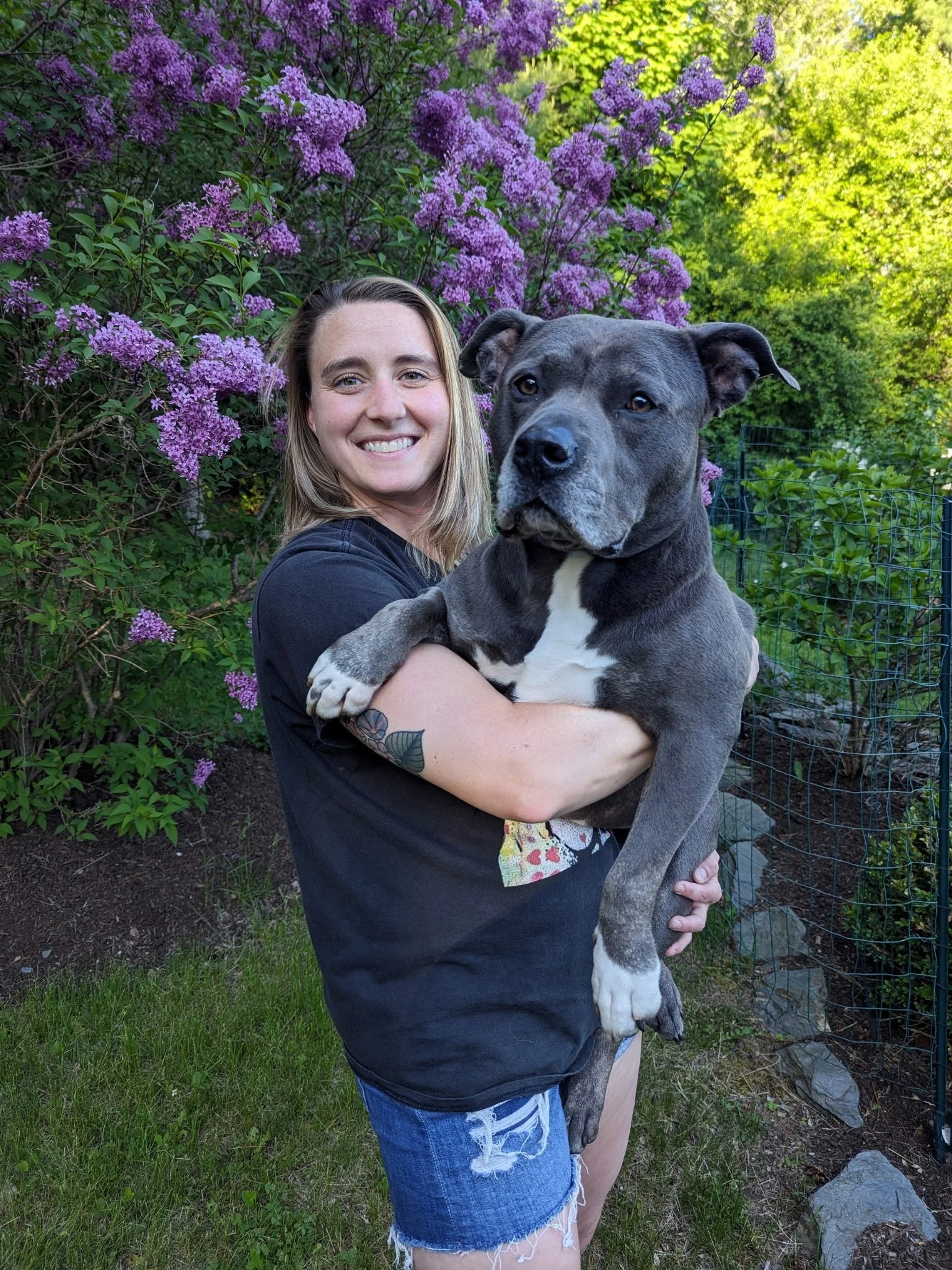
Freya is a special soul. She has a lot of needs and she’s not shy about verbalizing them. She enjoys having the company of other dogs (rabbits too, on occasion) - but, she wants to be the center of attention. She tends to get bored easily. Freya requires focused care that attends to her unique personality and her need for both quiet and engagement. That requires a personalized care routine that is designed to keep her not just healthy, but happy.
Translating a Founder’s Vision
Emily started with a strong foundation: a unique philosophy of care and a loyal client base.
What she did not yet have was a business structure.
No brand identity.
No website.
No defined positioning.
Just a vision for doing dog boarding differently.
My role was to translate that vision into a coherent operational system — defining the structure, constraints, and decisions required before the business could open.
Because the facility itself is still in planning, this work established the design logic guiding future site selection, layout, and experience decisions. It represents the foundation for how the environment will be built rather than a finalized operating staate.
Because the founder is family, this work was done pro bono. The design challenge, however, closely mirrors the kinds of early-stage problems founders face when building a new venture from the ground up.
The Problem
Most dog boarding businesses are designed around throughput and efficiency.
Large numbers of dogs.
High staff turnover.
Highly standardized environments.
The founder wanted something fundamentally different.
Her philosophy centered on:
small group sizes
structured enrichment
calm, retreat-style environments
deep familiarity with each dog
In other words, she wanted to design something closer to a hospitality experience than a kennel.
Designing for Alignment
This required making a series of foundational decisions that would define how the business operates.
The goal was not simply to create marketing materials.
The goal was to align several layers of the system before the business opens:
operational structure
daily experience design
brand positioning
visual identity
website architecture
Translating Emily’ philosophy into a functioning business required answering a series of design questions:
What operational model supports that philosophy?
What capacity constraints protect the experience?
How should the brand communicate the difference?
How will potential clients understand what makes this place special?
Without intentional design, those questions often get answered accidentally as businesses grow.
The goal of this work was to answer them before the business launches.
Experience Architecture
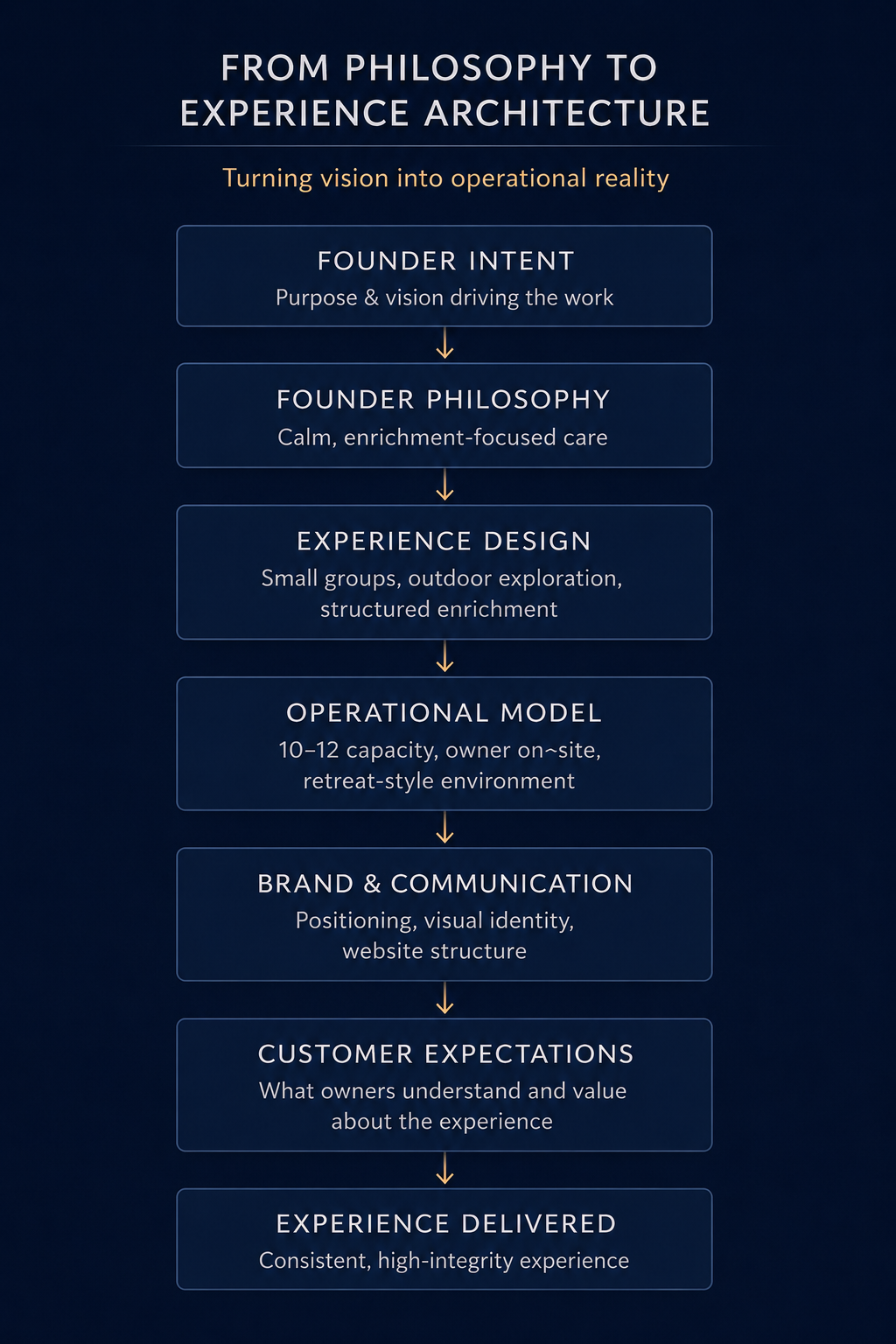
Starting from the founder’s philosophy, we worked outward through a series of design layers.
When these layers reinforce one another, customers understand what the business offers before they ever arrive.
That clarity becomes part of the experience itself.
Founder Philosophy
Emily’s philosophy of care is grounded in the dog’s perspective.
Instead of asking “What services should the business offer?” the guiding question became:
What does a dog’s day feel like here?
That framing produced several design principles.
Small-group boarding
Capacity intentionally limited to maintain calm social dynamics.
Outdoor exploration
Access to fenced outdoor areas and guided walks across the surrounding land.
Structured enrichment
Puzzle toys, scent work, and cognitive activities integrated into daily routines.
Rest periods and calm transitions
a daily rhythm that supports both stimulation and recovery.
Continuous supervision
Because the owner will live onsite above the facility, dogs will never be left unattended overnight.
Together these elements defined the concept as a boutique retreat for dogs, rather than a daycare-style boarding facility. These principles became the foundation for every downstream decision.
Operational Model
Once the experience was clear, we defined the operational structure needed to support it.
Key decisions included:
limited capacity (approximately 10–12 dogs)
owner-on-site operations
structured group compatibility
retreat-style property environment
Capacity became a protective constraint rather than a scaling target.
Brand & Communication
Once the experience model was clear, the positioning became simple and direct:
A calmer boarding experience for dogs.
We designed a brand identity and initial website structure intended to communicate the experience clearly to potential clients as the business moves toward launch.
This included:
messaging that explains the philosophy of care
visual identity and logo system
an image-forward website plan emphasizing transparency, environment, and eventual visibility into the facility itself
One of the visual concepts we developed playfully references the retreat’s name through dog–mermaid imagery, inspired by the founder’s own dog (Freya).
The goal was to create a brand that feels warm, distinctive, and memorable, while still signaling professionalism and trust.
Current Design Outcomes
Although the retreat has not yet opened, this early-stage design work established several foundational elements that will guide how the business operates from day one:
a clearly articulated philosophy of care
a draft operational model aligned with that philosophy
a brand identity and visual system
an initial website and communication plan
positioning that differentiates the retreat from traditional boarding facilities
Just as importantly, the process helped the founder clarify what she does not want the business to become as it grows.
That clarity will help protect the experience that attracted her clients in the first place.
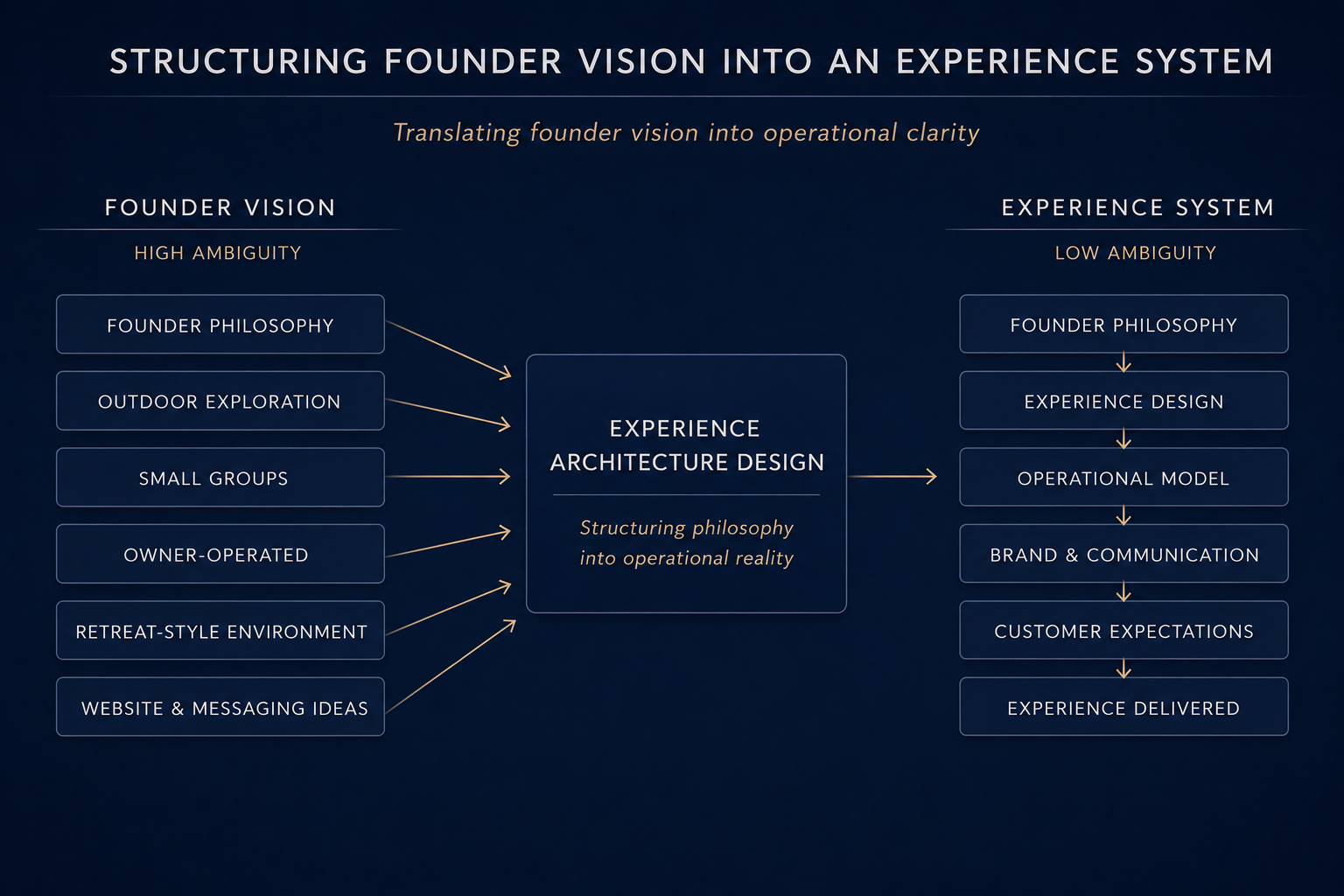
Reflection
This was a small project, but the design challenge closely mirrors the kinds of problems early-stage founders face in many industries.
Before systems exist, someone has to decide:
what the experience should feel like
what operational structure supports that experience
what constraints protect it over time
how to communicate it clearly to customers
Those decisions shape the trajectory of the business long before the first customer arrives.
In this case, the system is still being built, which makes this work less about documenting a finished business and more about designing the conditions that allow it to open with integrity.
Although this case involved designing for a physical service business, the same work applies to internal systems, products, or decision-making environments.
Sometimes those systems live inside organizations.
Sometimes they involve dogs and mermaids.
But the underlying work is the same:
translating vision into operational reality.