
Building a Living Framework: Career Transformation (CTF)
A build in pubic approach to developing adaptive systems for navigating uncertainty
Introduction
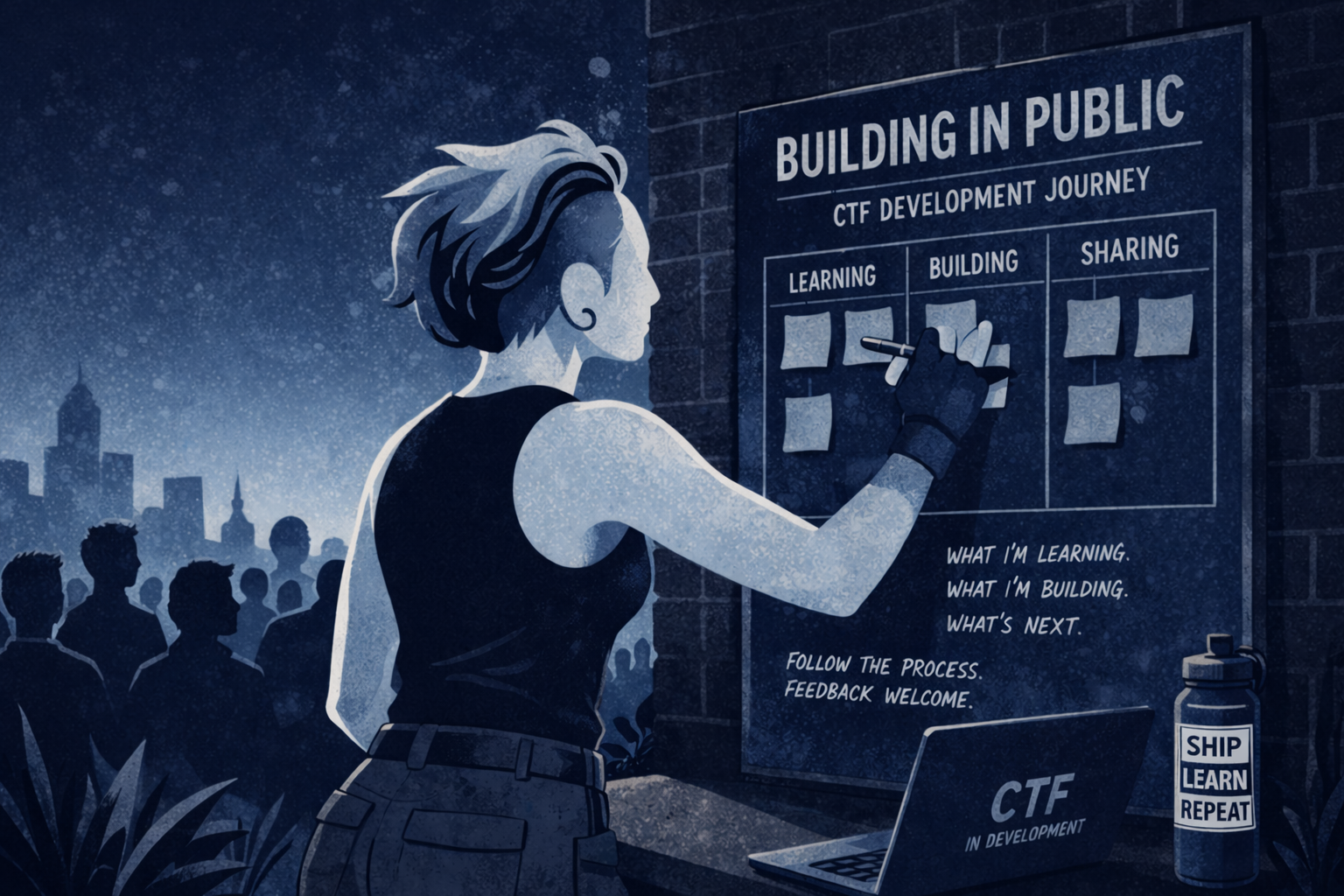
This page documents the development of a Living Framework in practice — how a system evolves through interaction, feedback, and repeated refinement over time.
The Career Transformation Framework (CTF) is one instance of this process.
Rather than presenting a finished model, this work traces how the system developed: how signals were interpreted, how decisions were adjusted, and how structure emerged through use.
How to Read This Build
This documentation reflects the iterative nature of system development.
Changes are presented as they occurred, but development was not strictly linear.
Insights emerged unevenly, and earlier assumptions were revised as new signals became available.
What matters is not any single version of the framework, but how the system evolved — how structure became more aligned with the conditions it was designed to navigate.
This build reflects the Living Frameworks method applied to human systems.
The approach applies same method used across Living Frameworks: structure is not imposed upfront, but developed through interaction, constraint, and feedback.
What the Career Transformation Framework CTF) is — and Is Not
The following system emerged as part of a broader method for building adaptive decision systems.
The CTF is not a personality assessment, a coaching program, or a set of universal rules for career success.
It is a structured way of interpreting situations where identity, opportunity, constraints, and uncertainty interact in complicated ways.
Career transition is the initial use case, but the underlying logic is applicable to other contexts involving ambiguous direction and irreversible choices.
The framework focuses on sequencing, signal interpretation, and constraint management rather than optimization.
How This Framework Was Developed
The Career Transformation Framework (CTF) did not begin as a predefined model.
It emerged from an attempt to understand a complex, high-uncertainty decision environment where existing tools proved insufficient.
Rather than searching for a single answer, the process focused on documenting the system itself — what kinds of questions arose, which approaches reduced confusion, and which introduced additional friction.
Writing served as a primary thinking tool and played a dual role: clarifying the model externally while revealing gaps, redundancies, and implicit assumptions internally.
Over time, patterns began to emerge: recurring friction points, predictable failure modes, and a sequencing dynamic in which certain insights only became accessible after others.
Development was empirical rather than purely conceptual.
Iterative Development
The framework evolved through repeated cycles of observation, articulation, testing, and revision.
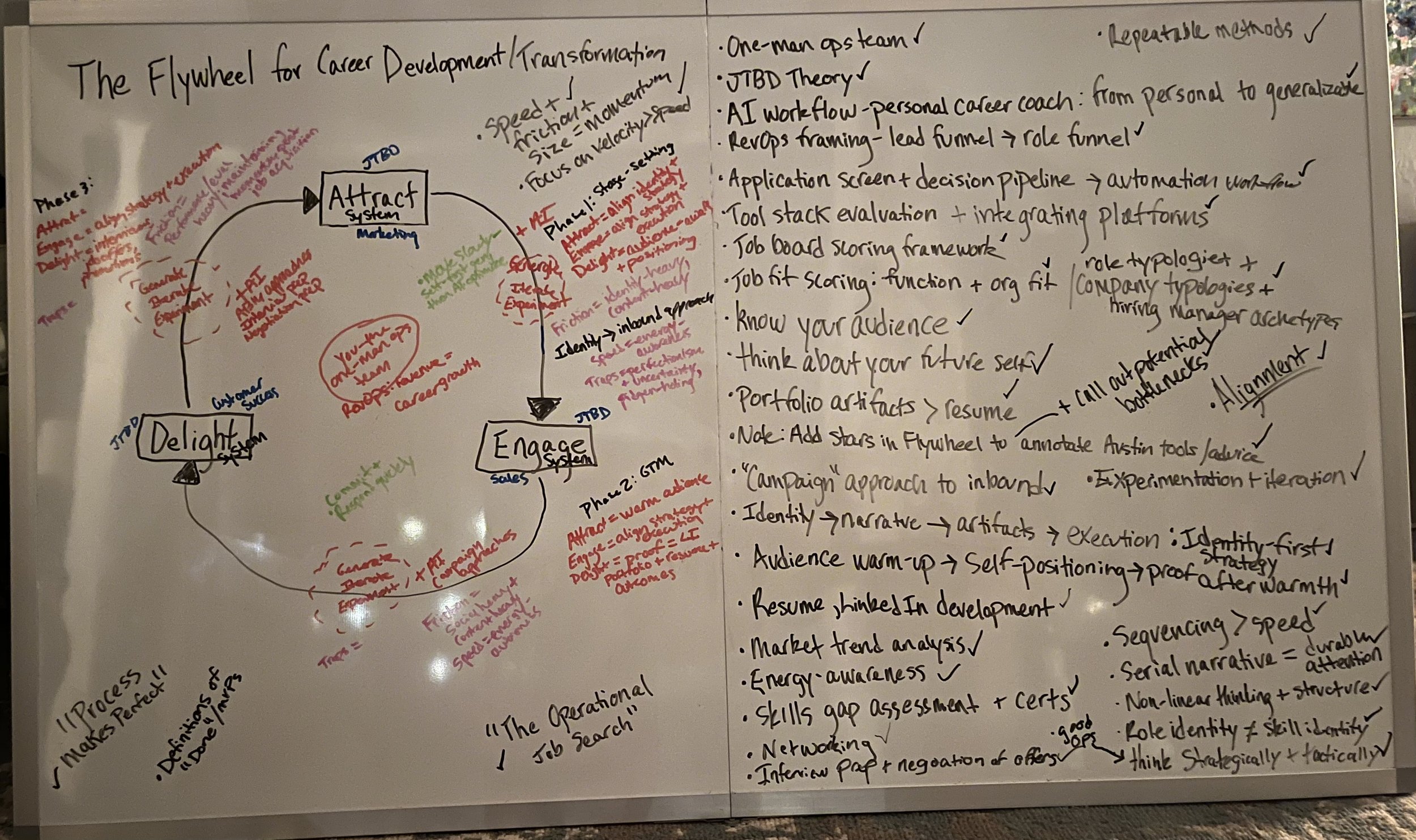
What began as unstructured notes and rough diagrams gradually became a more coherent system.
New elements were not introduced all at once.
They were incorporated only after they proved useful in practice — by improving decision clarity, reducing confusion, or preventing known failure modes.
The process moved between different levels of abstraction — from conceptual structure to applied use and back again — revealing gaps and inconsistencies that required refinement.
The goal was not theoretical completeness but operational usefulness:
“Could the model help someone interpret their situation more accurately and act more deliberately?”
Early Structure and Theoretical Grounding
The earliest iteration began as a simple flywheel model for career development, captured through informal diagrams and exploratory notes.
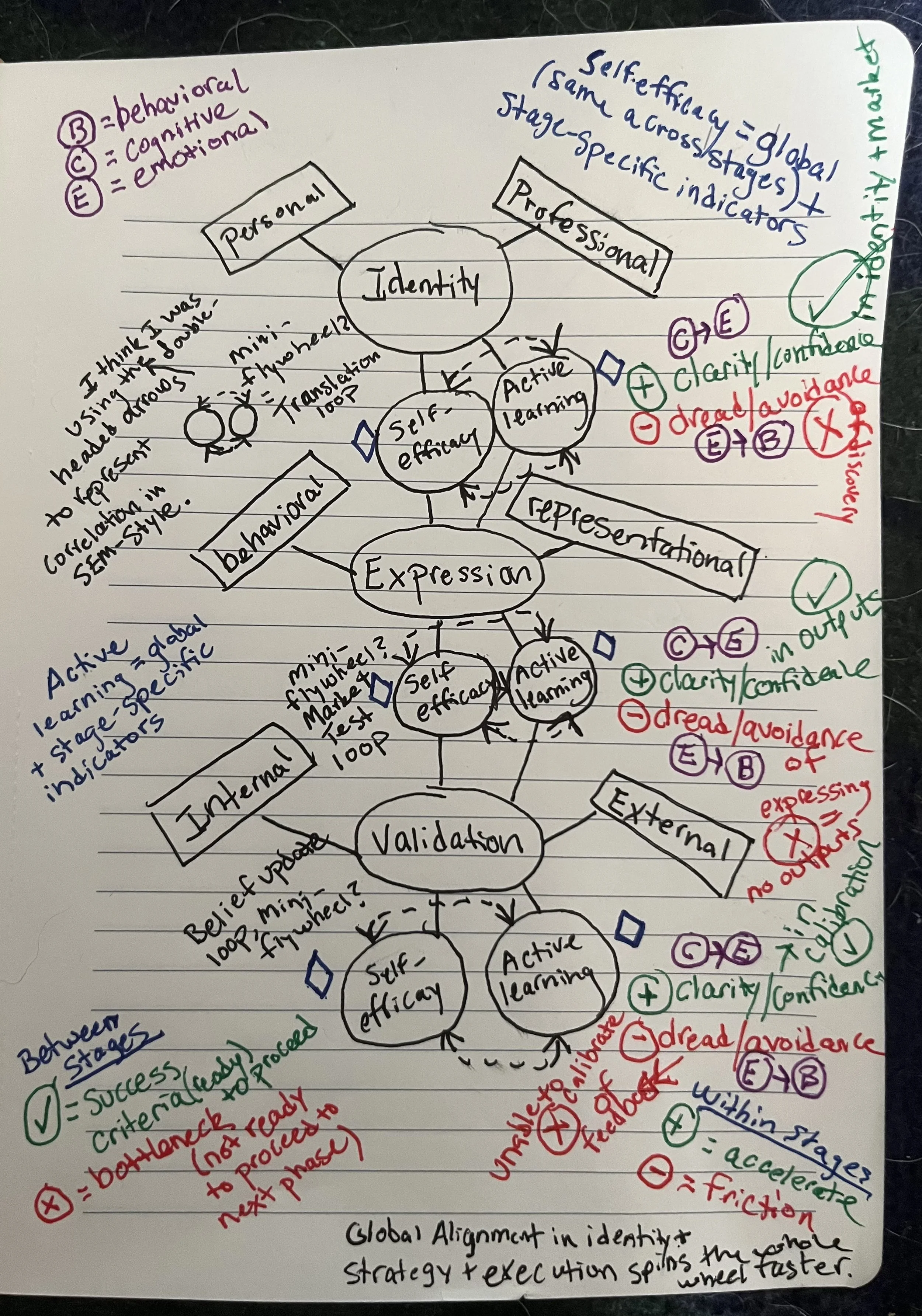
As the system developed, it became clear that underlying psychological theory was shaping its structure. This led to a deeper examination of the theoretical foundations — ensuring that the conceptual model was coherent before expanding practical application.
Structural Evolution Through Signal
As the framework was applied, specific structural limitations became visible.
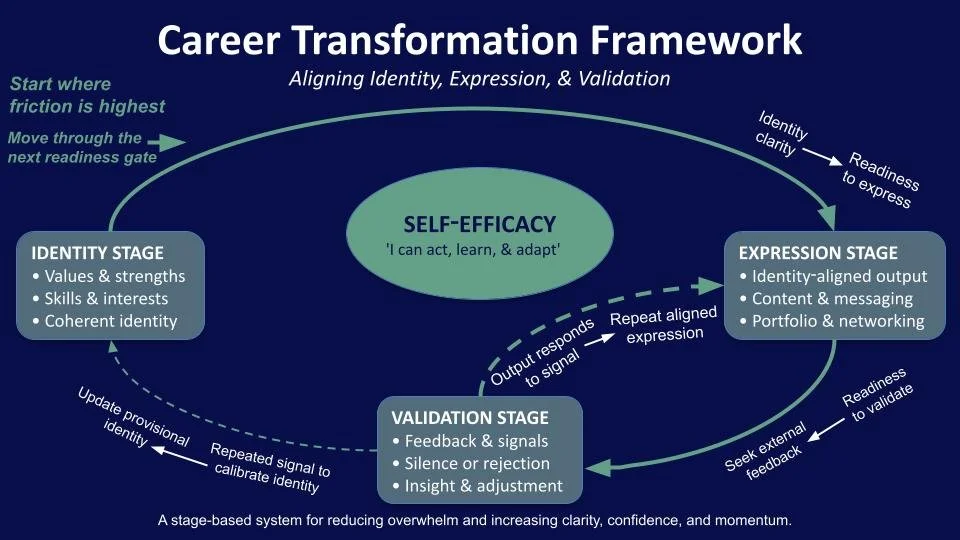
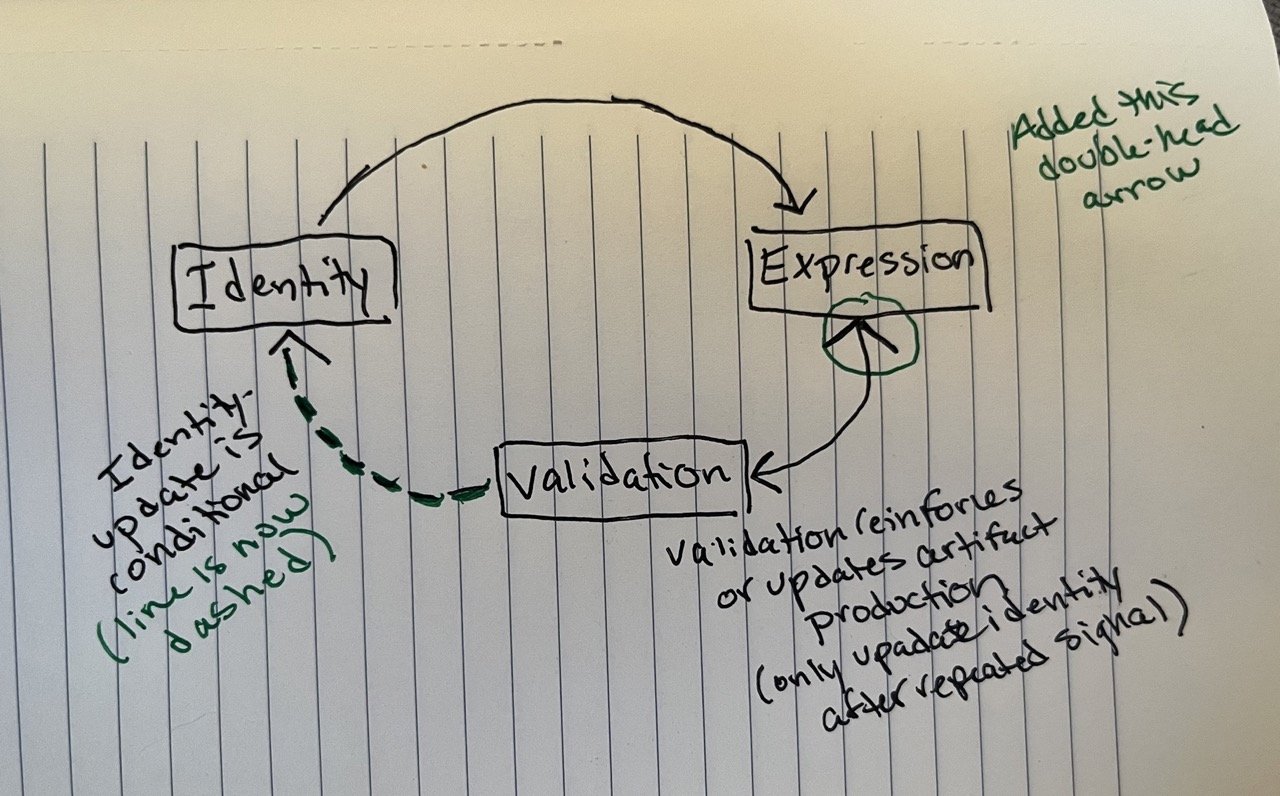
One of the most significant updates involved the relationship between the Validation Stage and the Identity Stage. Initially represented as a continuous loop, this connection implied that all users should revisit identity work as part of the cycle.
However, signal from real-world use suggested otherwise.
Not all individuals required identity rework to progress.
In many cases, identity was already sufficiently stable.
This led to a structural revision: replacing the continuous loop with a conditional path, represented as a dashed connection — indicating that returning to identity is situational rather than required.
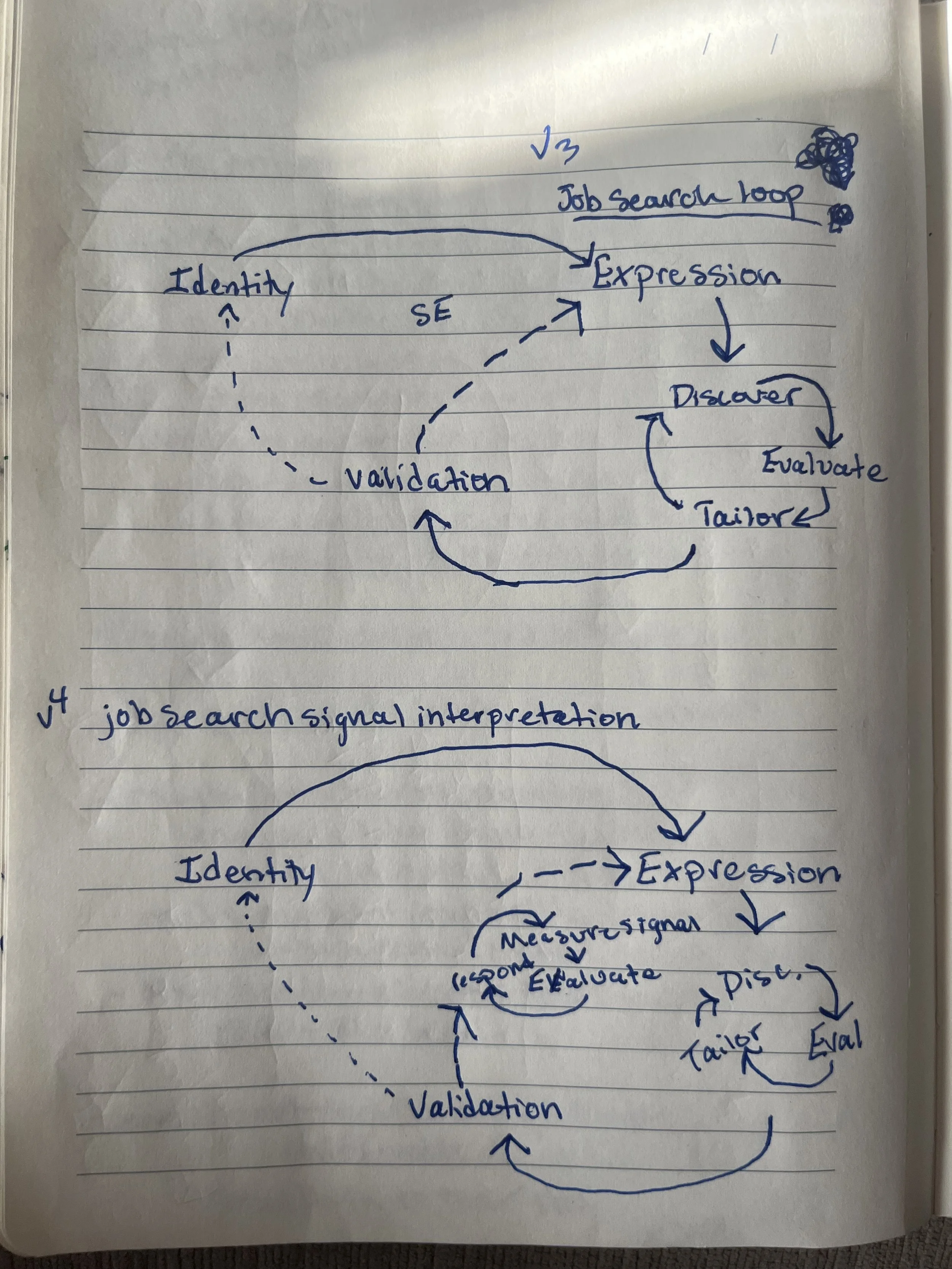
A similar issue emerged in the relationship between Validation and Expression.
The original model suggested a fixed progression.
However, in practice, continued expression was often justified directly by reinforcing signals from validation.
This led to another structural adjustment: introducing a conditional return path from Validation to Expression.
Refining Inter-Stage Dynamics
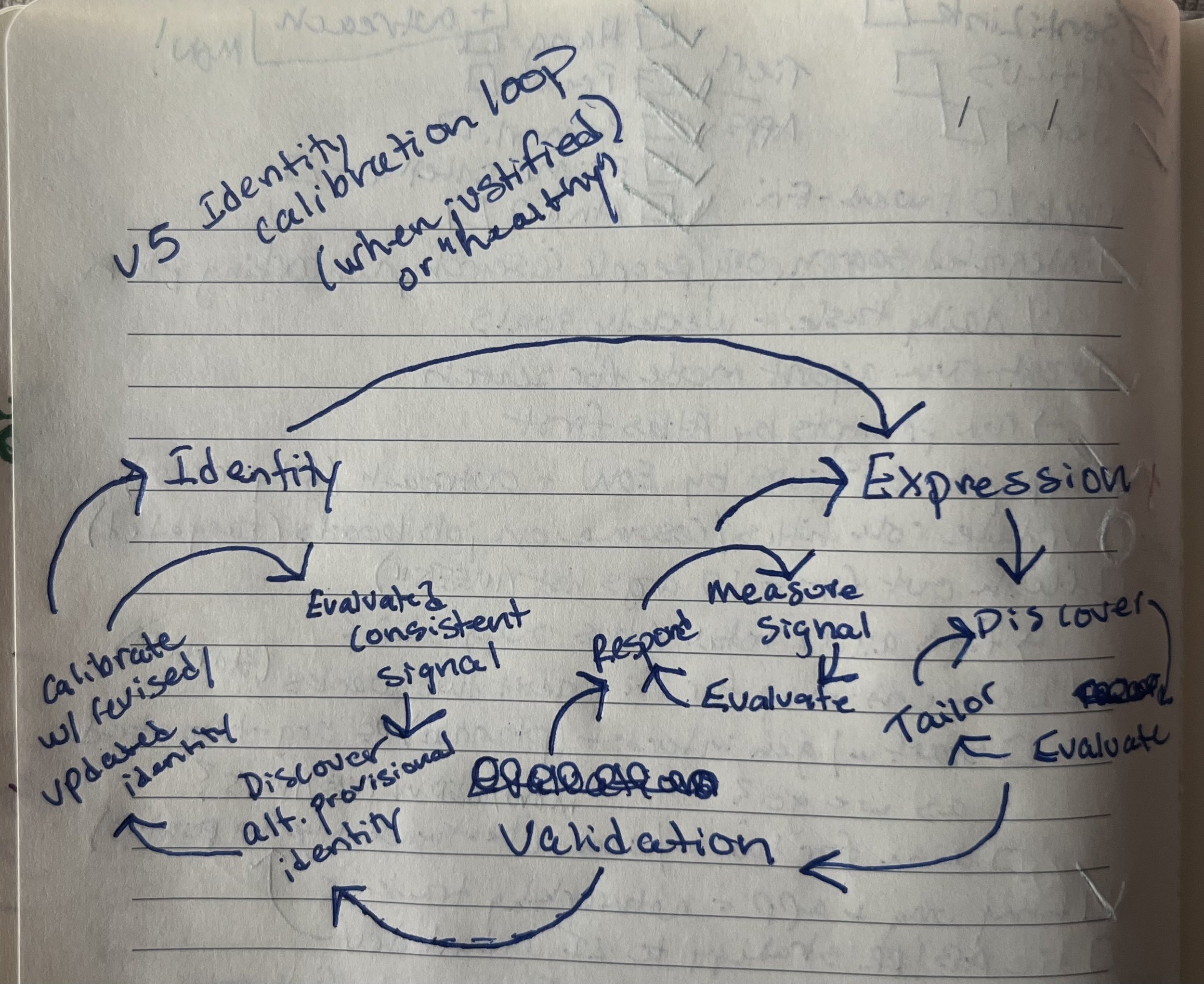
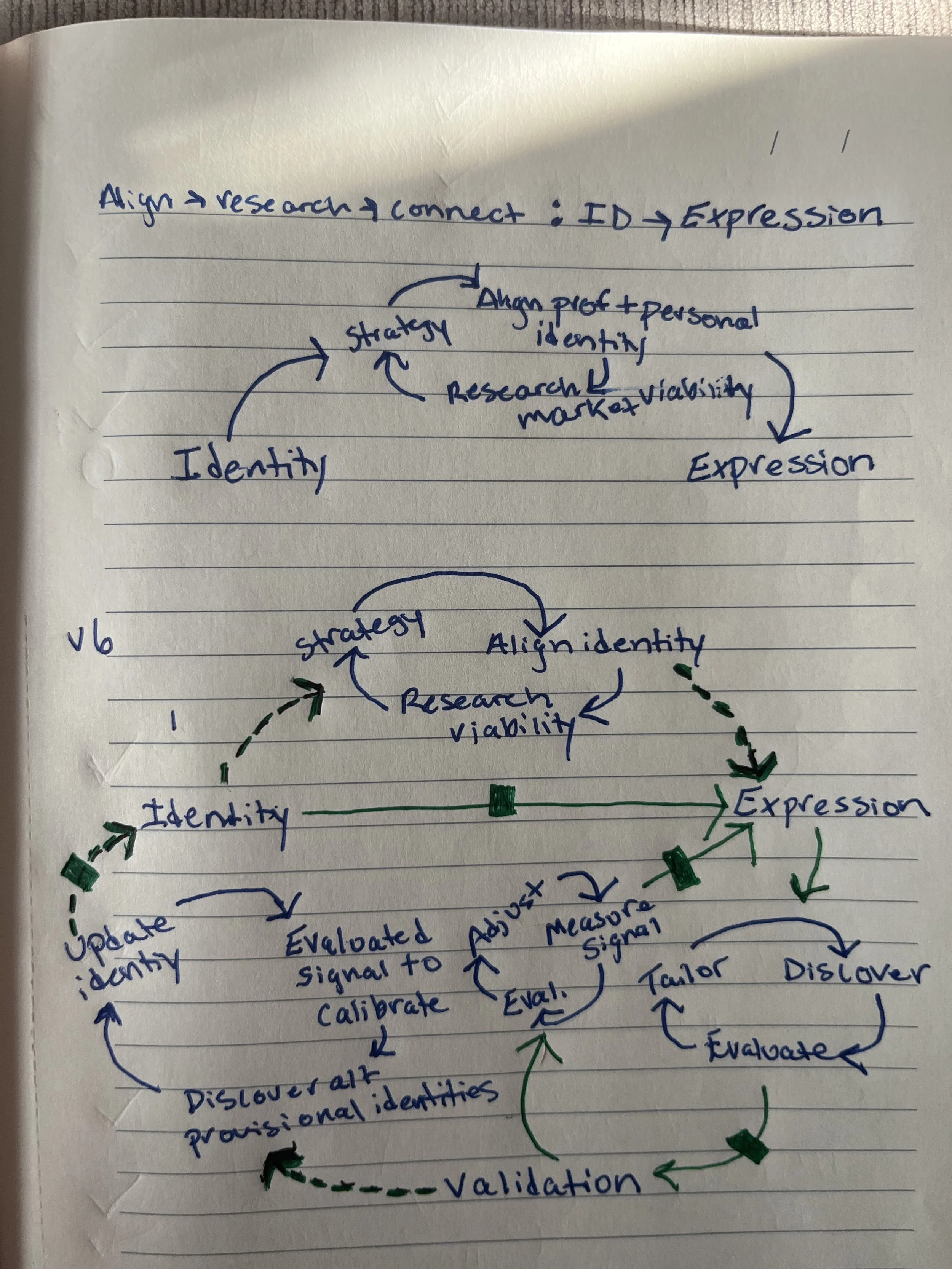
Further development revealed that transitions between stages were underspecified.
The model initially emphasized stage progression but did not fully capture the iterative work required within and between stages.
To address this, “mini-loops” were introduced — representing the repeated actions, adjustments, and evaluations that occur before progression.
These additions significantly improved the interpretability of the model, aligning it more closely with how individuals actually navigate complex decisions.
Constraints and Guardrails
Several constraints guided development:
No premature public positioning
The framework was kept private until it reached a level of stability suitable for critical review.
Emphasis on sequencing
Ideas were introduced only after earlier components were well understood, mirroring the structure of the framework itself.
Avoidance of overgeneralization
Claims were limited to what the model could reasonably support.
Focus on decision support, not prescription
The framework aims to improve interpretation of complex situations rather than dictate specific actions.
These guardrails were intended to reduce the risk of creating a persuasive but fragile model.
External Input and Review
Although the framework originated from direct experience, it was not developed in isolation.
Discussions with trusted peers, mentors, and collaborators introduced alternative perspectives and served as reality checks.
These interactions helped distinguish broadly applicable patterns from more context-specific insights.
Before public release, the framework was assembled into a structured manuscript and shared privately for review.
Feedback was incorporated gradually to preserve coherence and avoid reactive changes.
Current Status
The Career Transformation Framework should be understood as a working system rather than a finished product.
It reflects one structured approach to navigating complex decision environments, informed by real-world use but still evolving as new signals emerge.
Current development focuses on expanding the practical application of inter-stage dynamics and refining how iterative processes are represented within the model.
Why This Is Shared
Sharing this work publicly is not about presenting a definitive solution.
It is an effort to make the reasoning visible — to show how systems develop, adapt, and improve over time.
If the framework proves useful, it will be because the underlying structure resonates with real experience — not because it claims universal authority.
The Career Transformation Framework is in ongoing development. I welcome your feedback.