Building Systems in Public
How systems are developed through observation, constraint, and iterative intervention over time.
Building Living Frameworks in Practice
Living Frameworks are not developed in isolation.
They are shaped through interaction — tested against real conditions, adjusted in response to feedback, and refined over time.
This process cannot be fully captured through static models or finished systems.
To understand how these frameworks work, it is necessary to observe how they evolve.
What Building in Public Means Here
Building in public, in this context, is not about visibility.
It is a method for documenting how systems develop over time.
Each system begins with an initial structure — often incomplete, sometimes incorrect.
As it is applied, signals emerge.
Those signals are interpreted, decisions are adjusted, and the structure evolves.
What is recorded here is not just what changed, but why — how signals were interpreted, what assumptions shifted, and how the system responded.
How This Relates to Living Frameworks
The method described in How Living Frameworks Are Built defines the structure used to construct adaptive systems. Building in public shows how that structure behaves in practice.
It reveals:
how signals reshape understanding
how decision logic evolves over time
how systems move from ambiguity toward alignment
Rather than presenting finished frameworks, this work documents systems as they develop — where assumptions are tested, refined, or replaced entirely.
How to Read These Builds
These build notes are not linear narratives.
They reflect the iterative nature of system development:
structures appear, change, and sometimes disappear
decisions are revisited as new signals emerge
earlier assumptions are replaced as understanding deepens
What matters is not any single version, but the progression — how the system becomes more aligned with the conditions it is operating within.
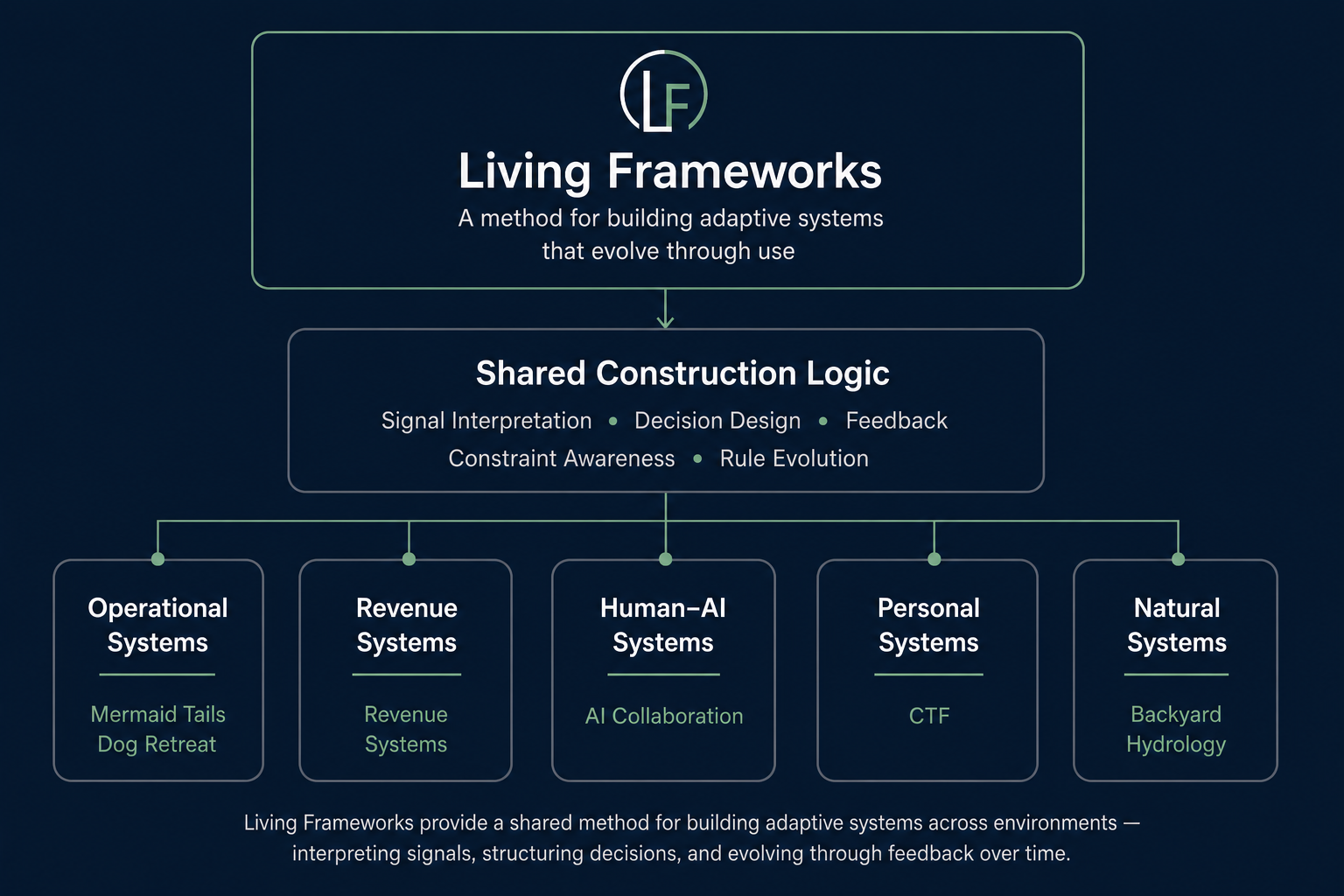
Build Notes
Across these builds, consistent patterns emerge — forming the basis of the Living Frameworks method.
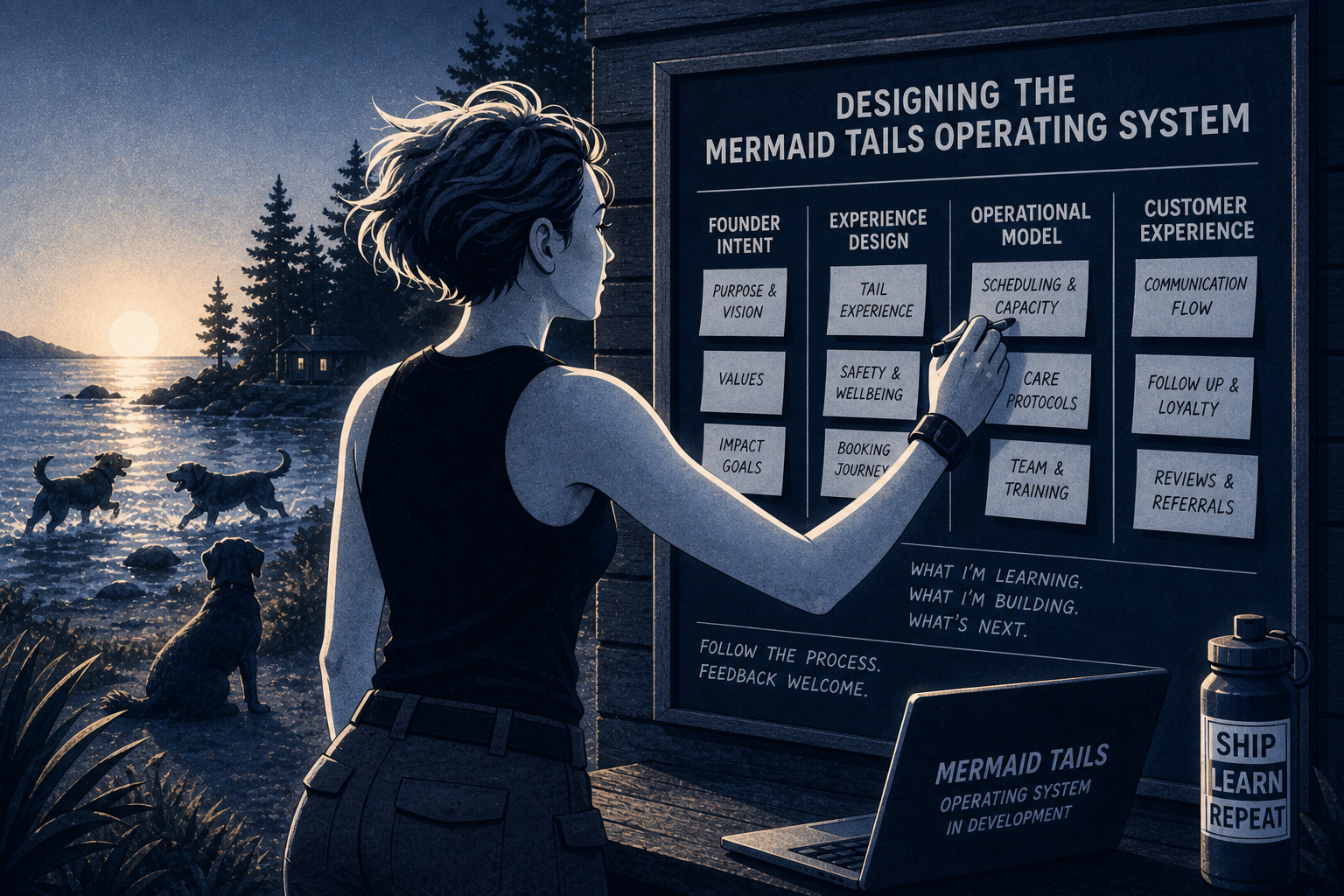
Operational Systems — Mermaid Tails Dog Retreat (Build Notes)
Building a business operating system from first principles.
Documentation of how an early-stage operating system is being constructed and refined through real-world application.
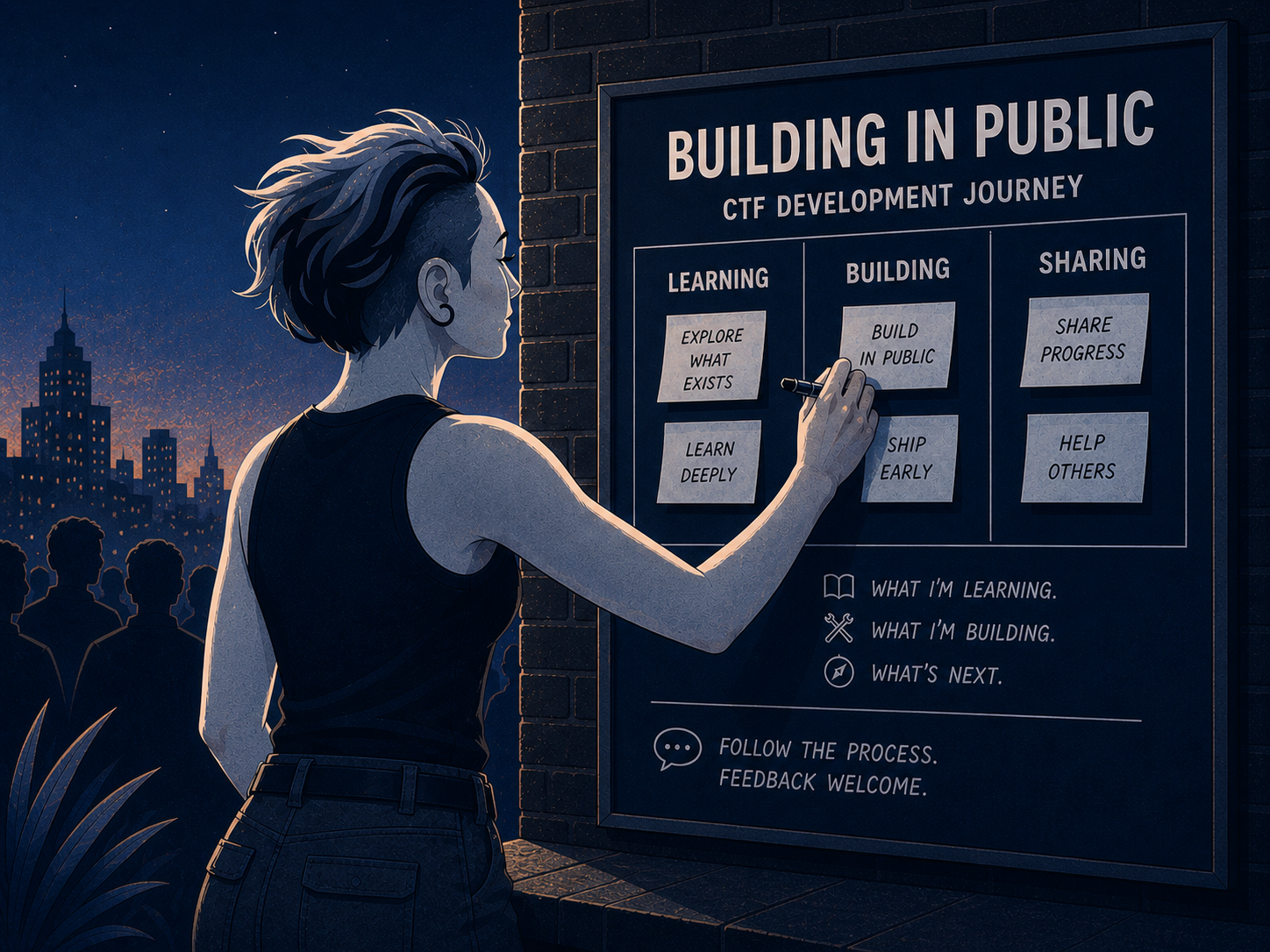
Developing a personal operating system for navigating uncertainty.
A build log documenting how a personal decision system evolved through staged cycles of identity, action, and validation. Tracks how signals from real-world application shaped the system’s structure, decision logic, and interpretation over time.
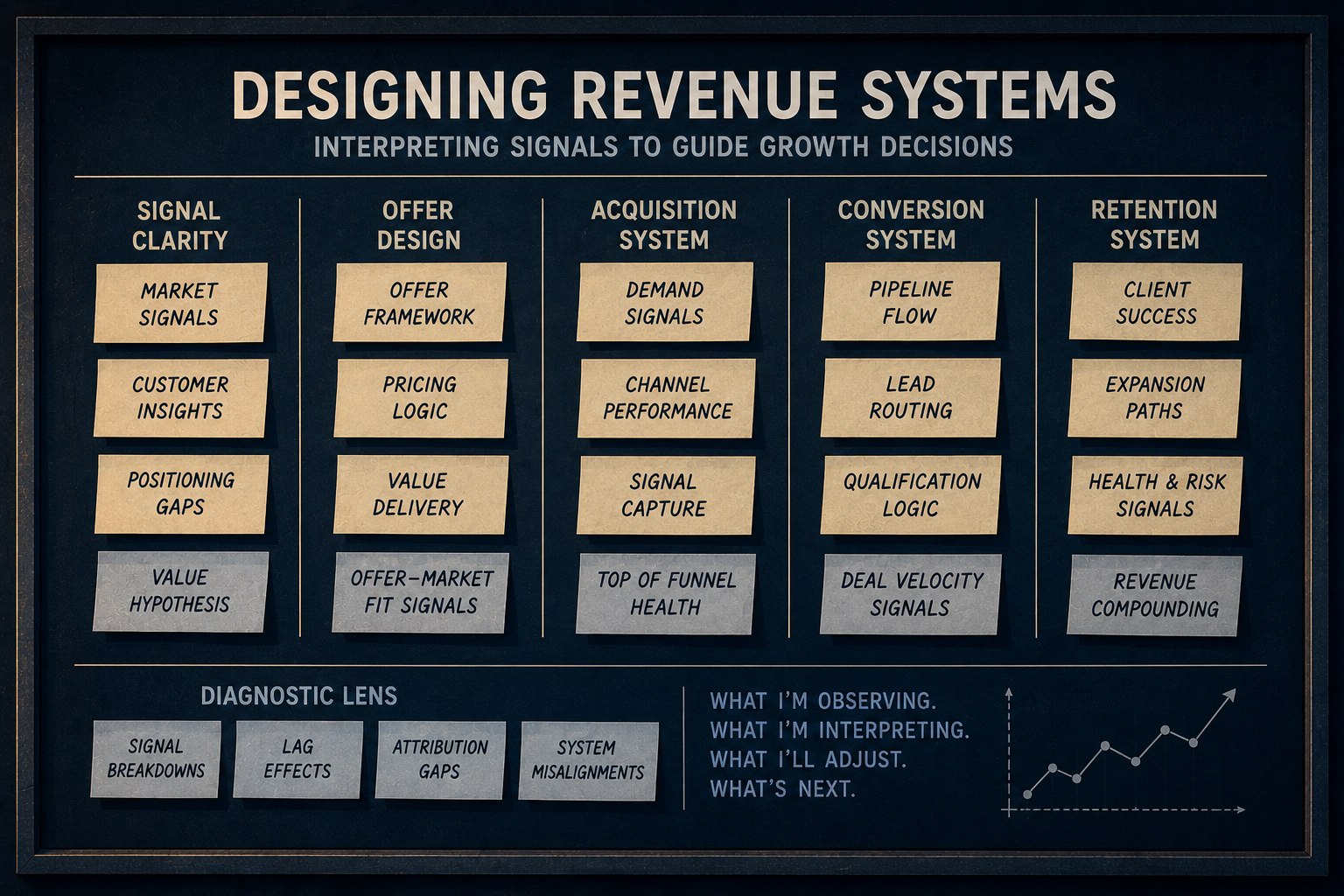
Designing systems that diagnose where revenue breaks down and guide more precise allocation of resources.
Documents how signal clarity improves over time — and how decision logic evolves as feedback reveals where the system is actually failing.
Human–AI Systems (Build Notes)
Designing systems for structured reasoning through human–AI interaction.
Documents how problem framing, exploration, evaluation, and synthesis evolve through iterative use — improving decision quality as signal is clarified over time.
Natural Systems — Backyard Hydrology (Build Notes & Project)
Designing a responsive system for managing environmental conditions.
Documents how water systems stabilize when flow paths are respected — showing how constraint-driven interventions produce durable, low-maintenance outcomes over time.